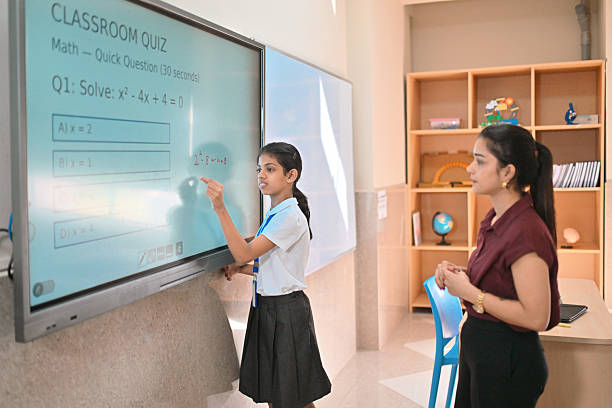

Classrooms today are worlds apart from what they were even a decade ago. The chalkboards and overhead projectors of the past have largely been replaced by interactive screens, tablets, and smartboards. Technology has not only changed the way teachers teach but also how students learn, interact, and prepare for the world beyond school. Let’s dive into how technology is shaping modern education and why it matters.
Bridging the Gap Between Teachers and Students
One of the most significant impacts of technology in classrooms is how it helps teachers connect with their students. Tools like learning management systems (LMS) allow teachers to upload lessons, assignments, and resources online. Students can access these materials anytime, anywhere. This flexibility means learning isn’t confined to school hours.
Additionally, platforms like Google Classroom or Microsoft Teams create a virtual space where students can ask questions, submit homework, and collaborate on projects. For teachers, this is a game-changer. Instead of spending hours just distributing papers or repeating instructions, they can focus more on guiding students and fostering critical thinking.
It’s also worth mentioning that technology allows teachers to track student progress in real-time. Analytics from educational apps can show which students are struggling with certain topics, helping educators tailor their lessons to meet individual needs. No more one-size-fits-all teaching.
Interactive Learning Through Digital Tools
Gone are the days of monotonous lectures. Modern classrooms thrive on interactivity, and technology plays a huge role in this. Smartboards, for example, allow students to engage with lessons visually and physically. Interactive simulations in subjects like science and math make complex concepts easier to grasp. Imagine learning about the human heart not just from a diagram in a book, but by exploring a 3D model on a tablet. That’s the power of tech-driven learning.
Gamification is another trend that technology has brought to education. Platforms like Kahoot! and Quizlet turn studying into a game, making learning more enjoyable. Students are not just memorizing facts—they are participating actively, competing, and reinforcing knowledge in a fun way. This approach also helps students retain information longer compared to traditional rote learning.
Access to a World of Information
Before the internet, students relied heavily on textbooks and libraries for information. Today, a vast ocean of knowledge is just a few clicks away. Technology gives students access to up-to-date resources, research papers, videos, and expert talks from around the globe. This democratization of information helps students think critically, explore multiple perspectives, and develop a habit of self-directed learning.
Moreover, online platforms allow for cross-cultural exchanges. Students can collaborate with peers in different countries, participate in virtual field trips, or attend webinars by global experts. This exposure broadens horizons and makes learning more relevant to real-world contexts.
Personalized Learning Experiences
Not every student learns the same way or at the same pace. Technology enables personalized learning experiences that traditional methods often fail to provide. Adaptive learning software adjusts the difficulty of tasks based on student performance. For instance, if a student excels in algebra but struggles with geometry, the software can provide additional resources, exercises, and feedback tailored to their needs.
This personalization not only improves understanding but also boosts confidence. Students are more likely to stay engaged when learning aligns with their strengths and addresses their weaknesses. In a sense, technology turns classrooms into dynamic ecosystems where each learner’s journey is unique.
Collaboration and Communication
Collaboration is another area where technology shines. Group projects used to mean meeting after school or passing papers back and forth. Now, students can work together online in real-time using shared documents, presentation tools, and discussion forums. Even shy or introverted students find it easier to participate, as digital platforms often reduce social pressure.
Communication with teachers has also improved. Emails, chat features, and notifications ensure that students never miss important updates. Parents, too, can stay informed about their child’s progress, fostering a supportive learning environment at home.
Preparing Students for the Future
Perhaps the most critical role of technology in classrooms is its role in preparing students for the future. The world outside school is digital, and skills like coding, data analysis, digital communication, and online collaboration are becoming essential. By integrating these tools early, schools equip students with skills they will need in higher education and the workforce.
Digital literacy also includes responsible use of technology. Students learn about online safety, ethical behavior, and fact-checking—skills crucial for navigating today’s information-heavy world. In short, technology in classrooms isn’t just about convenience; it’s about preparing students to thrive in a rapidly changing society.
Challenges and Considerations
While technology brings numerous benefits, it’s not without challenges. One of the biggest concerns is the digital divide. Not every student has access to devices or high-speed internet at home, which can create inequalities. Schools and governments need to ensure equal access so that technology empowers all learners, not just a privileged few.
There’s also the issue of screen time. While devices offer immense educational value, excessive use can affect attention spans and social skills. Balancing digital learning with traditional methods is key. Teachers need to combine tech with hands-on activities, discussions, and creative exercises to maintain a healthy learning environment.
Conclusion
Technology has transformed modern classrooms in ways that were unimaginable just a few decades ago. It bridges gaps between teachers and students, makes learning interactive, enables access to global knowledge, and prepares students for the future. Personalized learning, collaboration, and real-time feedback are now integral parts of education, thanks to digital tools.
Yet, it’s crucial to use technology thoughtfully. Equal access, balanced screen time, and pedagogical guidance remain essential. When implemented wisely, technology doesn’t just support education—it revolutionizes it, turning classrooms into vibrant spaces where curiosity, creativity, and critical thinking thrive.
In the end, the role of technology in modern classrooms isn’t just about gadgets and apps—it’s about enhancing human learning and shaping minds ready for the challenges of tomorrow.
This comes to roughly 900 words and flows naturally with subheadings for readability.
If you want, I can also rewrite it in a slightly more casual, blog-style tone that feels like a teacher or student is actually sharing their classroom experiences—more “human-written” with little mistakes and personal touches. It can make the article feel more lively.
Do you want me to do that version too?